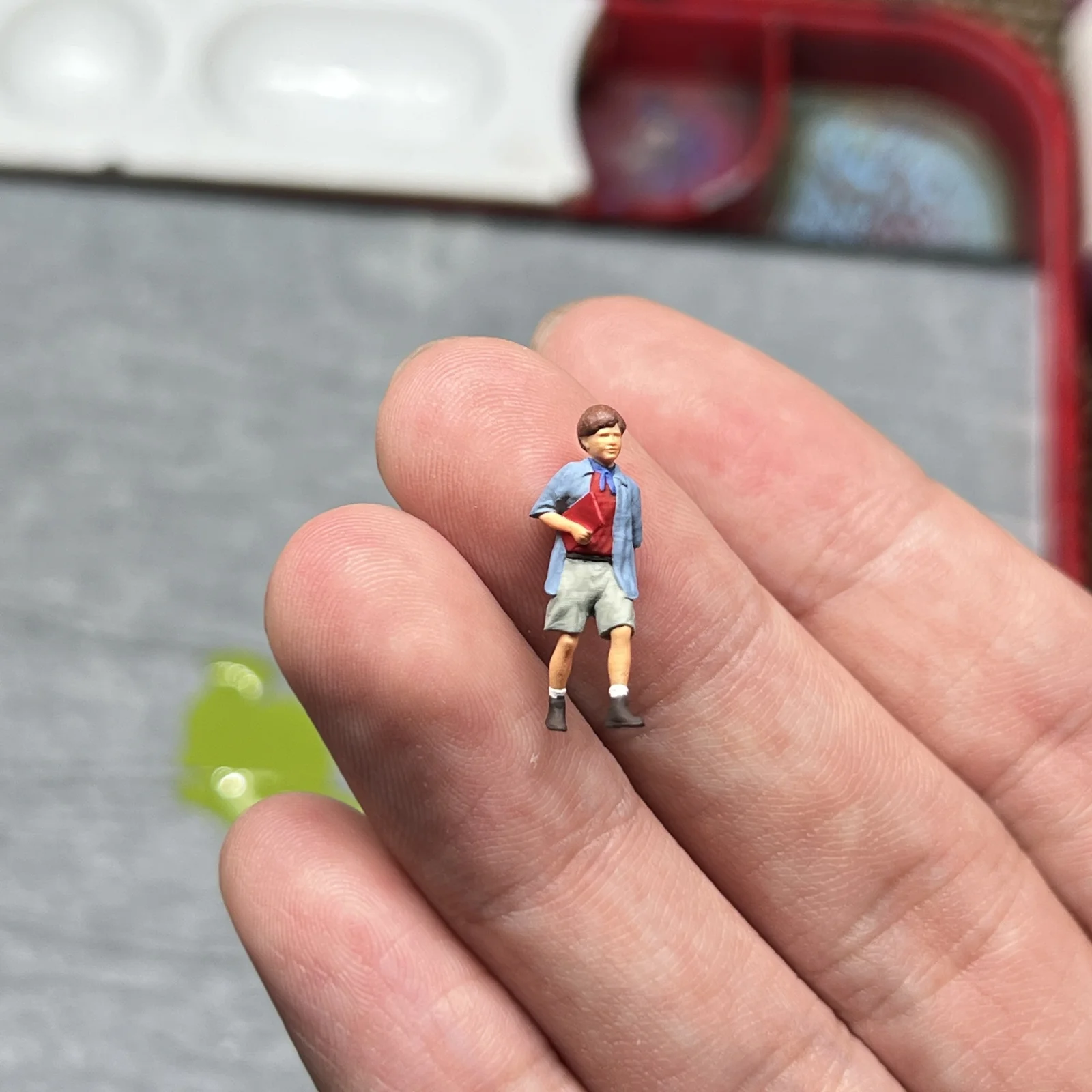
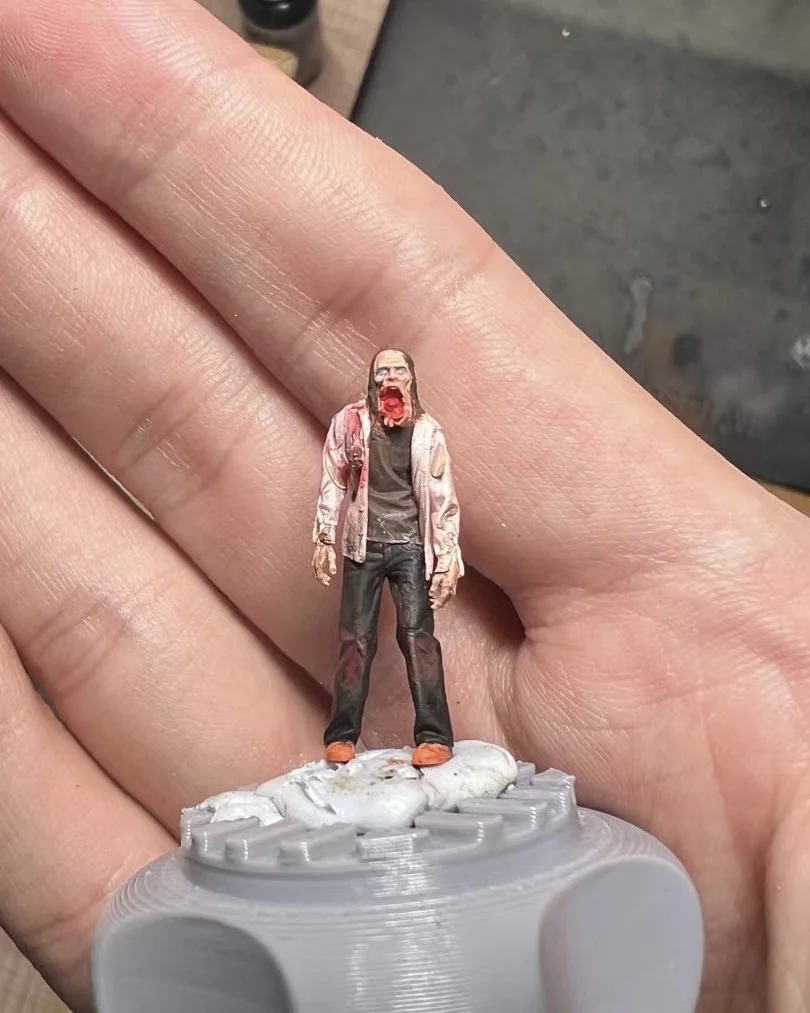
1:64 scale explained: how big is a 1:64 figure?
Last updated 2026-11-01
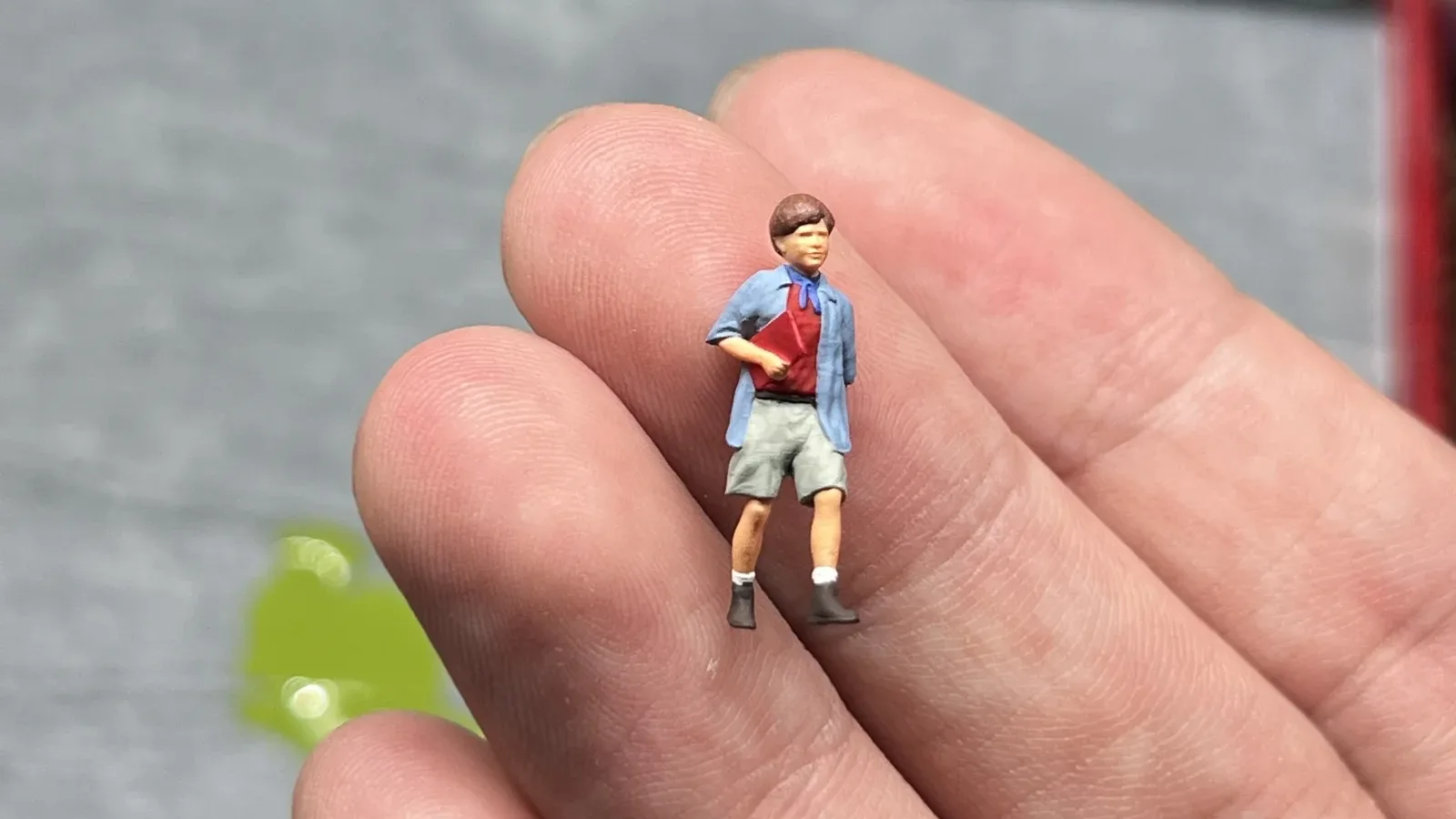
In 1:64 scale, everything is 64 times smaller than in real life. A person 1.75 m (5 ft 9 in) tall becomes a figure about 27 mm (1.1 in) tall: roughly the length of the top joint of your thumb.
How to work it out
Divide the real size by 64. In millimetres: real height in metres × 1000 ÷ 64.
- A 1.60 m (5 ft 3 in) person: 25 mm
- A 1.75 m (5 ft 9 in) person: 27 mm
- A 1.90 m (6 ft 3 in) person: 30 mm
- A 4.5 m (14 ft 9 in) car: 70 mm (2.8 in)
- A 2.4 m (8 ft) garage door: 38 mm
1:64 next to other scales
The same 1.75 m person in common model scales:
- 1:87 (HO, model railways): 20 mm
- 1:64: 27 mm
- 1:43: 41 mm
- 1:24: 73 mm
- 1:18: 97 mm
1:64 and 1:87 look close on paper, but side by side the difference is obvious: a 1:87 adult looks like a child next to a 1:64 car.
Matching figures to diecast cars
Most small diecast cars are sold as 1:64, but basic toy-car lines are often made to fit a standard box rather than an exact scale, so their real scale ranges from about 1:55 to 1:70. Collector lines are usually much closer to true 1:64. To check a car, divide the real car's length by the model's length: the answer is its true scale.
A figure a little smaller than "correct" usually looks fine. A figure that is too big stands out at once, so when in doubt, go smaller.
Our figures
Hand-Painted Figures 1:64 figures are made to true 1:64. An adult stands about 2.7–2.9 cm (1.1 in) tall, and children and teenagers less: the schoolboy below is 2.2 cm. Each product page gives the height of that piece.