1:64 diorama ideas for figures and cars
Last updated 2026-11-02
Pick one small moment and build around it: a car being repaired, a person walking home or a vehicle left on an empty street. Start with one car, one or two figures and a few props. A clear action matters more than filling every corner.
A repair garage
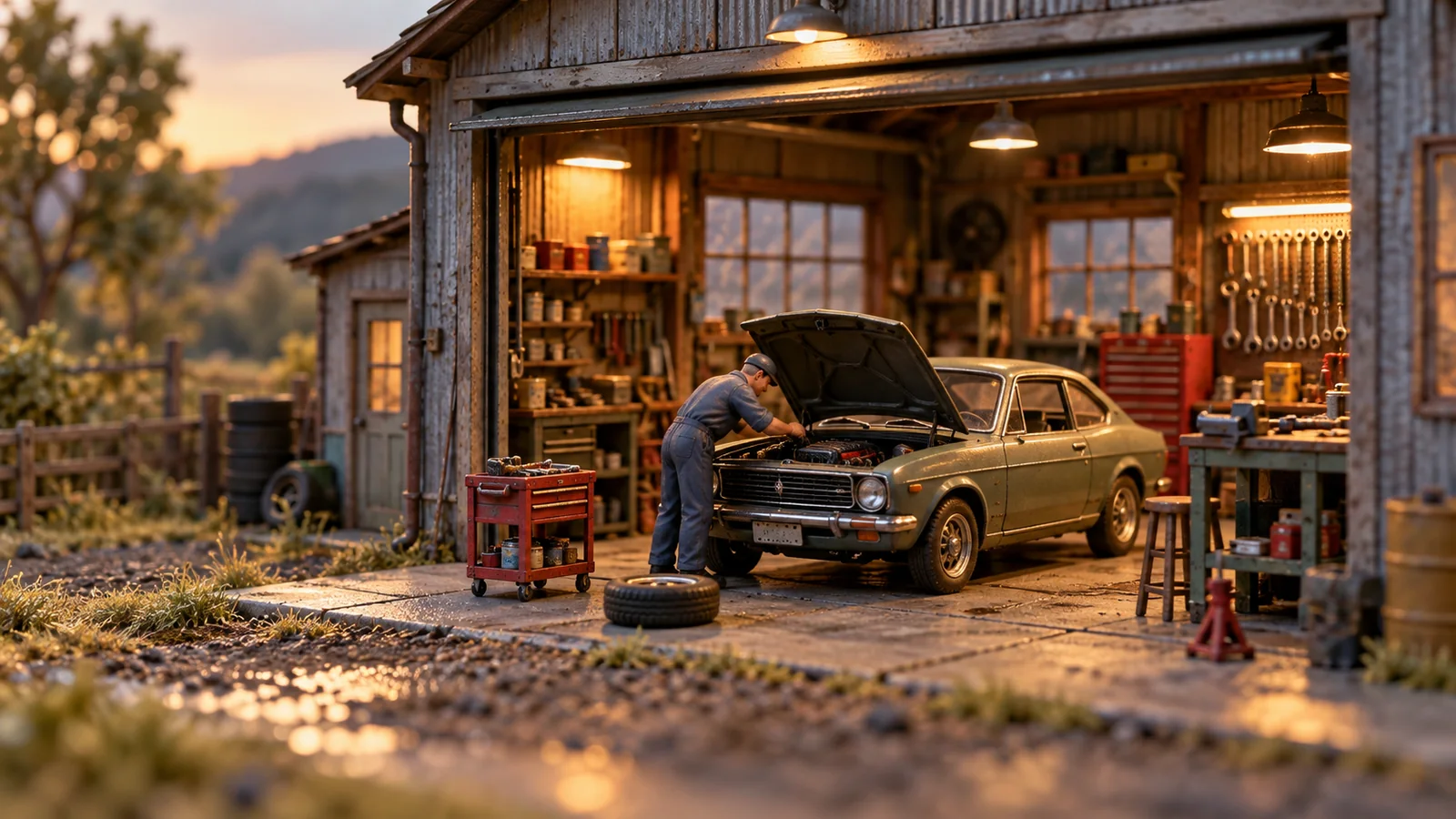
Park a car beside a workbench or tool chest. A mechanic figure standing by the bonnet or carrying a tool gives the garage a reason to exist. Add a tyre stack and a floor marked with restrained wear; leave space around the car so the action remains visible.
Try placing the car at a slight angle to the back wall. A doorway or window suggested in the background adds depth without requiring a complete building. Make sure tools and furniture are suitable for the same scale.
An everyday street
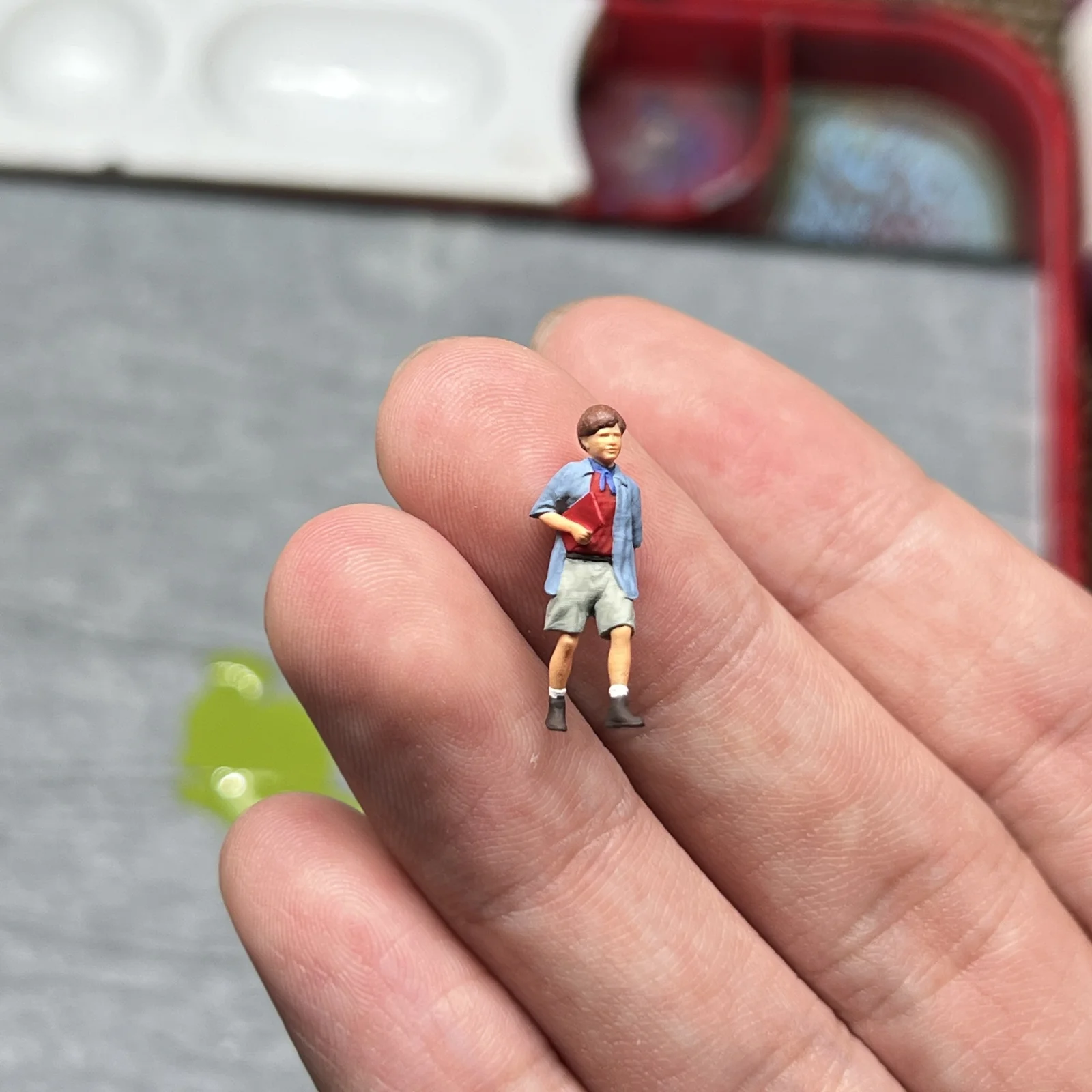
Use a short section of pavement, a kerb and a parked car. A pedestrian or a figure carrying a book can provide the focus. Turn the figure towards a crossing, doorway or car to suggest a destination; leave the rest of the street comparatively quiet.
At 1:64, a real 1 m length is about 16 mm. Use that conversion to check a pavement or doorway rather than relying on a picture alone. A simple card backdrop can suggest a wall without adding distracting detail.
An abandoned road
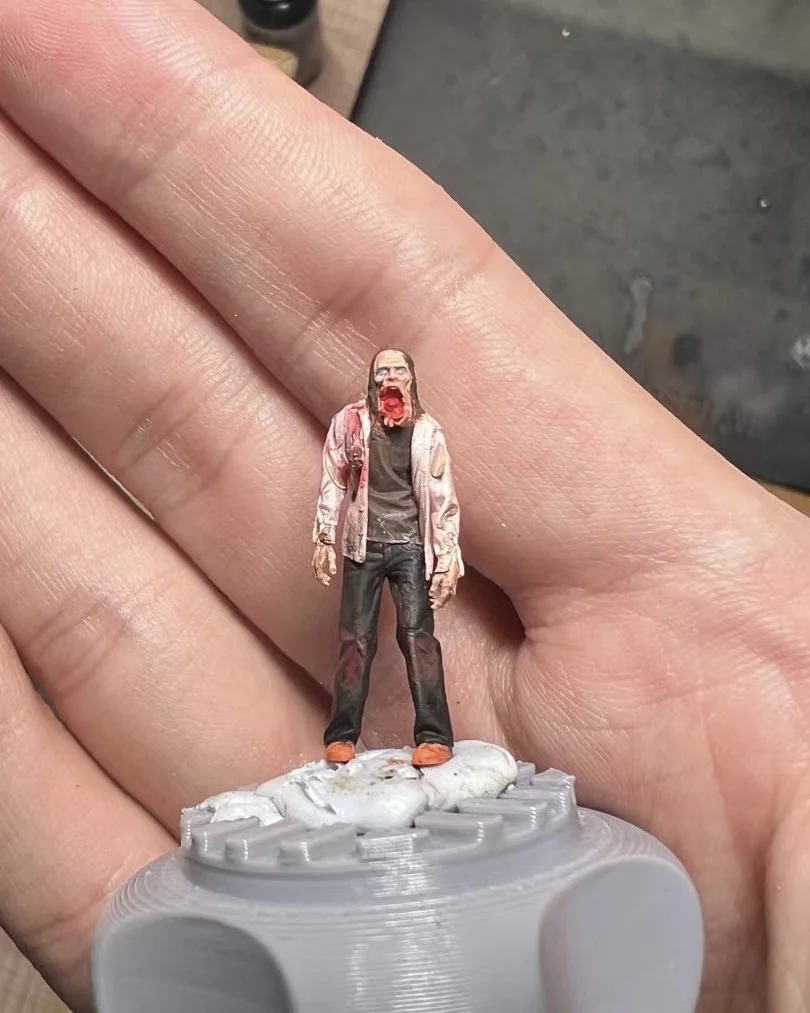
A stalled car, scattered debris and a zombie figure can tell an immediate story. Choose a few weathered details rather than covering every surface: a broken fence or an uneven road edge is enough to suggest neglect. Keep loose props away from thin painted parts.
Use a muted background to make the figure readable, and position it so it does not disappear behind the car. A low camera angle can make the scene feel larger; see phone photography tips.
A roadside pause
For a quieter scene, put a car beside a fence, a small sign or a patch of grass. A standing figure looking towards the road makes the scene feel occupied without needing a building. Leave some open ground around the car so the composition can breathe.
Build and change the story
Arrange the largest pieces first, then add figures and finally small details. Look from the front and from above. Remove anything that hides the main action or makes the scale look inconsistent. A removable mounting method lets you try another arrangement later; test putty first because it can leave marks.
These are scene suggestions: figures, cars and props are separate unless a product page says otherwise. Check each listing for what is included.