How to match 1:64 figures with diecast cars
Last updated 2026-11-02
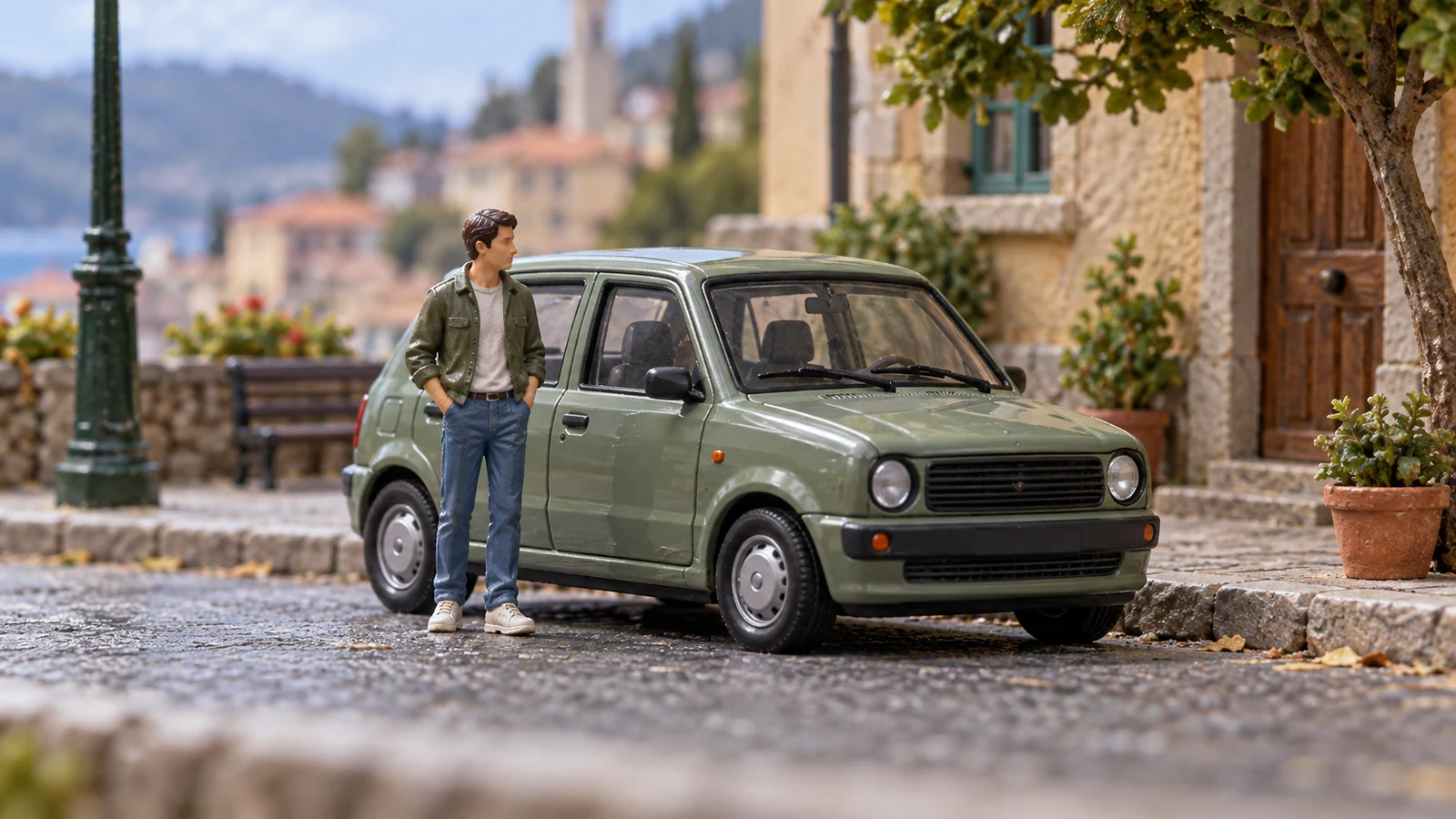
Start by comparing the figure and car at the same ground level, then choose a pose that explains what the person is doing. A useful scale check and a little space around the car are usually enough to make a small display feel convincing.
Check the numbers
At 1:64, divide a real measurement by 64. A 1.75 m adult becomes about 27 mm; a 4.5 m car becomes about 70 mm long. People have different heights, and a seated or bent figure will measure less than a standing one. A child's figure should not be judged against an adult height.
Not every small car has an exact 1:64 scale. If you know the full-size car's length, divide that length by the model's length using the same units. For example, 4,480 mm divided by 70 mm gives 64. When the real dimensions are unavailable, compare the figure with the car's door and roof as a practical visual check.
For more examples see 1:64 scale explained.
Match the pose to the story
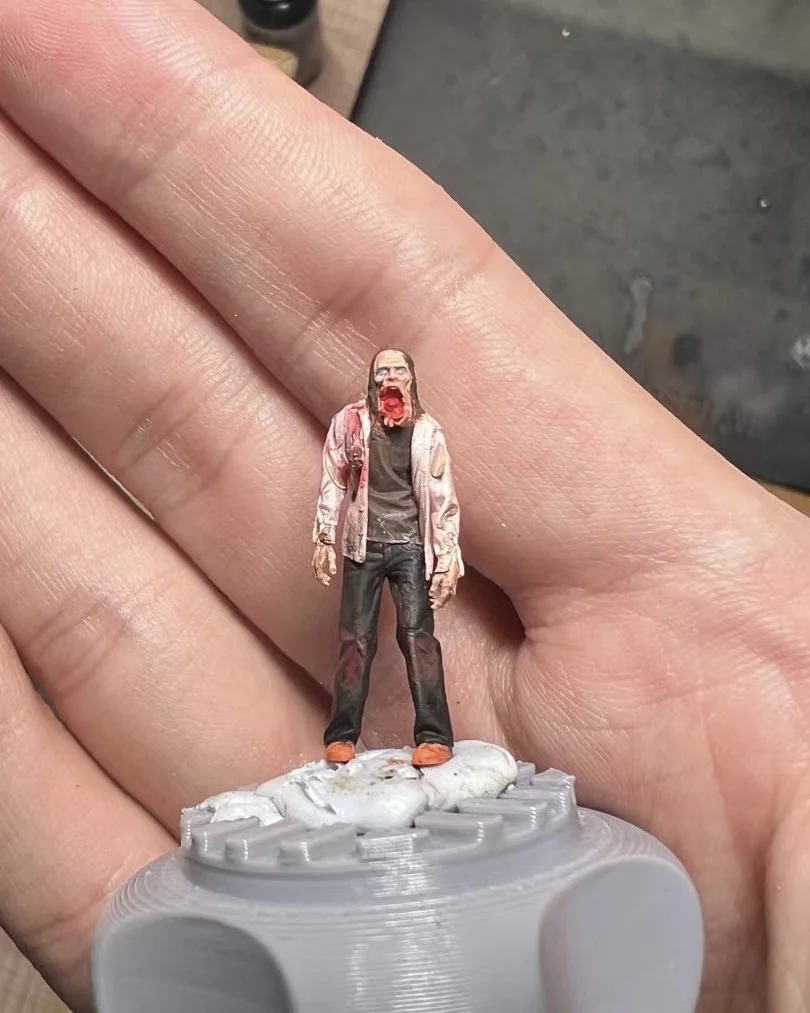
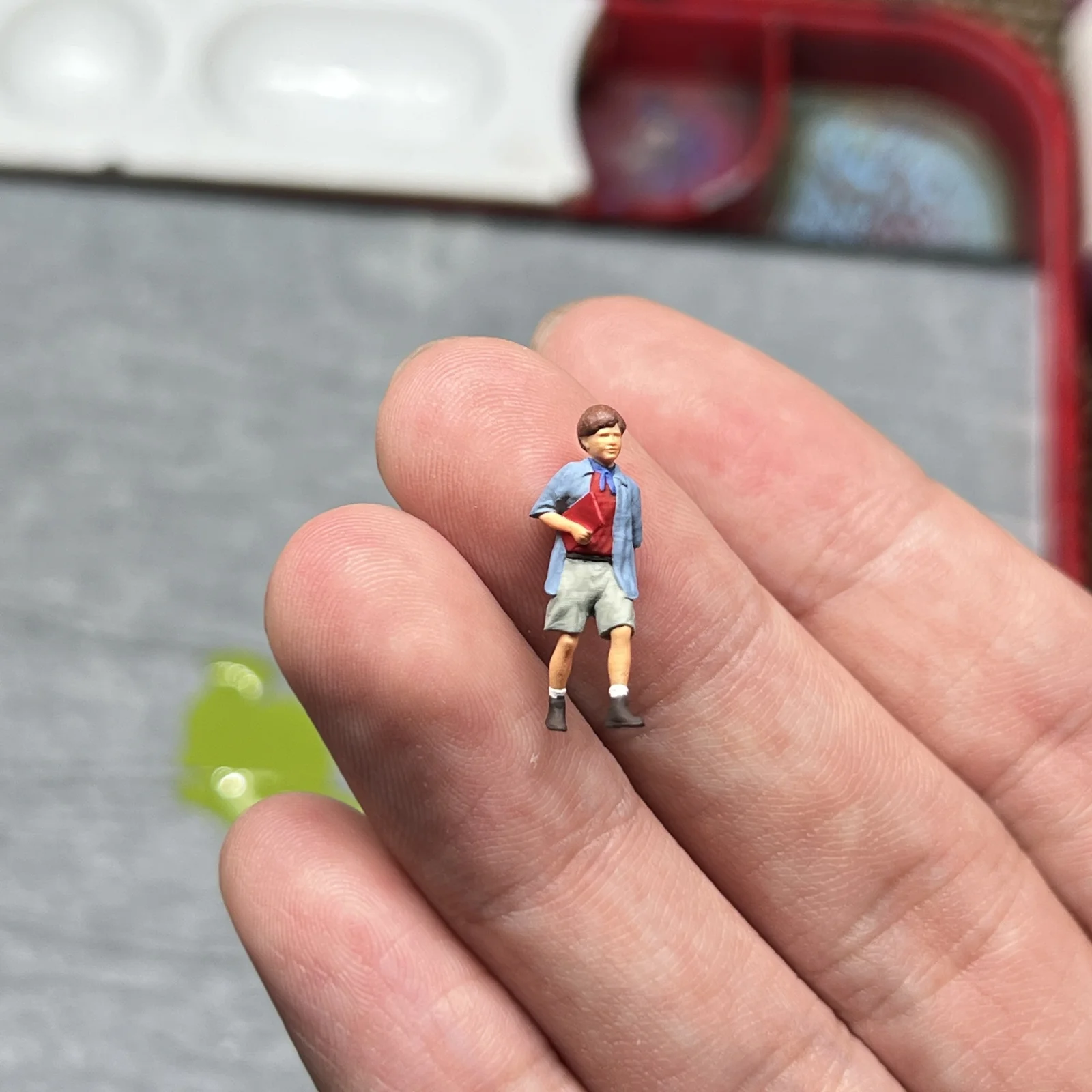
Choose what happens before deciding where the figure stands. A standing person may be waiting beside a car; a seated figure may suit a bench or interior if it fits. A figure holding a book could stand near a pavement or school setting. A zombie can suggest a deserted street or an abandoned vehicle.
- Check clearance before placing a figure inside a car; do not force it through an opening.
- A hand, tool or accessory should point towards the action rather than into empty space.
- If the car doors do not open, a figure can still wait beside it or walk past it.
Place people and cars
Put the car on a flat surface first, then place the figure alongside the door, pavement or front corner. Leave a visible gap where a person would need room to stand. Avoid lining every figure up at the same angle: small changes in direction suggest different actions.
View the scene from the intended display angle and from figure eye level. If the figure disappears behind the car, move it towards the camera rather than raising it on a visibly oversized base. Keep the car and figure on the same ground plane unless the scene has a pavement or slope.
Fix and review
Try the arrangement before fixing anything. A small amount of removable putty under a foot can help temporarily; test it first and check for residue. Handle painted figures by the body or legs, not thin projecting parts. Photograph the layout, then make one adjustment at a time until the scale and story read clearly.