A beginner's guide to 1:64 dioramas
Last updated 2026-11-02
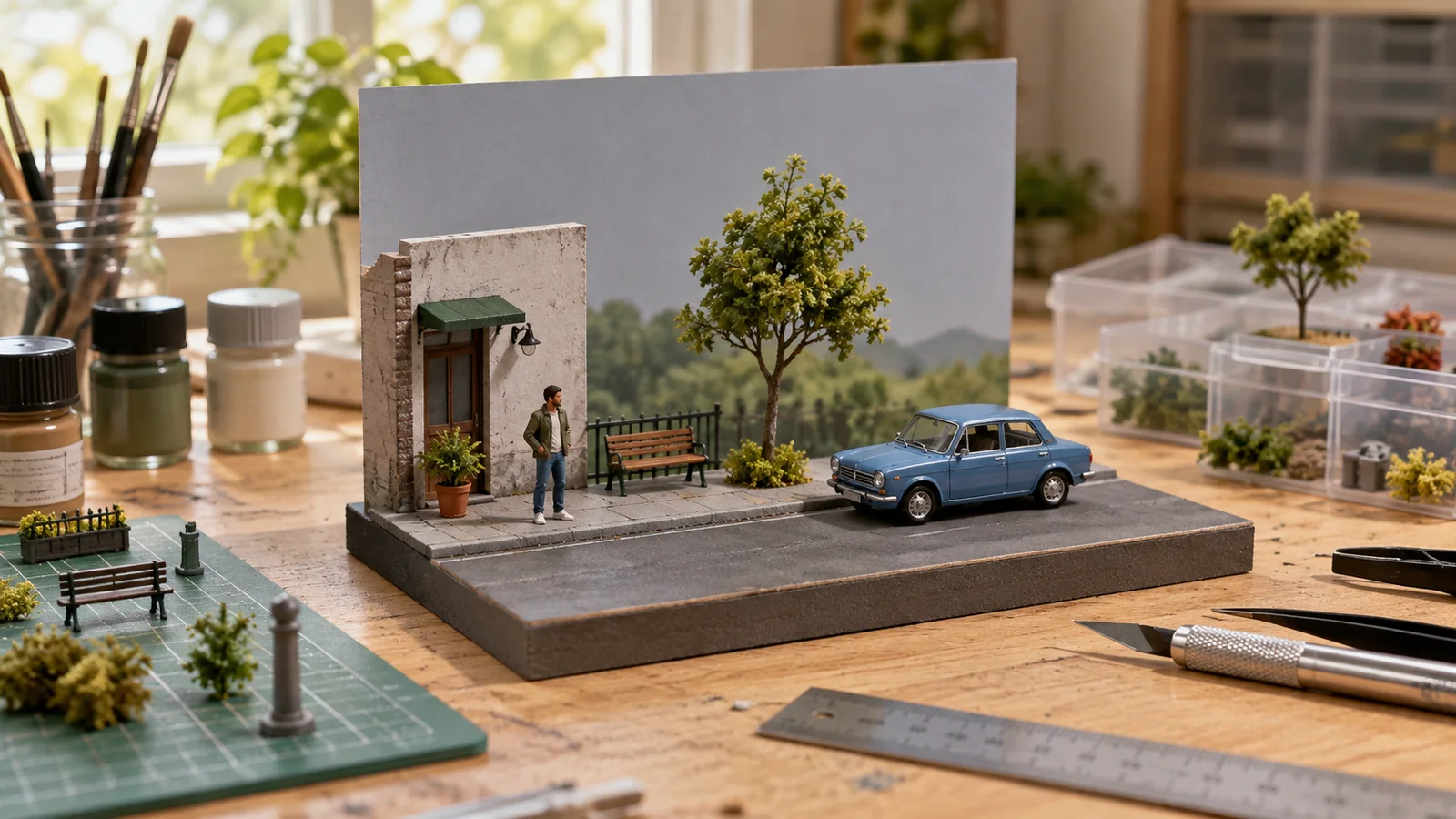
To make your first 1:64 diorama, choose a small base, one figure and one simple setting. Add a car if it fits the story. Arrange everything before gluing, and check the scene from a low angle. You can make a satisfying display without building a whole street.
What you need
- A flat, rigid base: a small piece of card or board is enough for a first layout.
- One 1:64 figure and, if you want one, a compatible car.
- A simple background, such as plain card, and a few scale-appropriate props.
- A ruler, clean hands and a soft towel to protect the figure while working.
- Removable putty or another suitable mounting method; test it on an inconspicuous area first.
You do not need expensive tools to plan a scene. If you cut card or use adhesives, follow the product instructions and protect the work surface.
Understand the scale
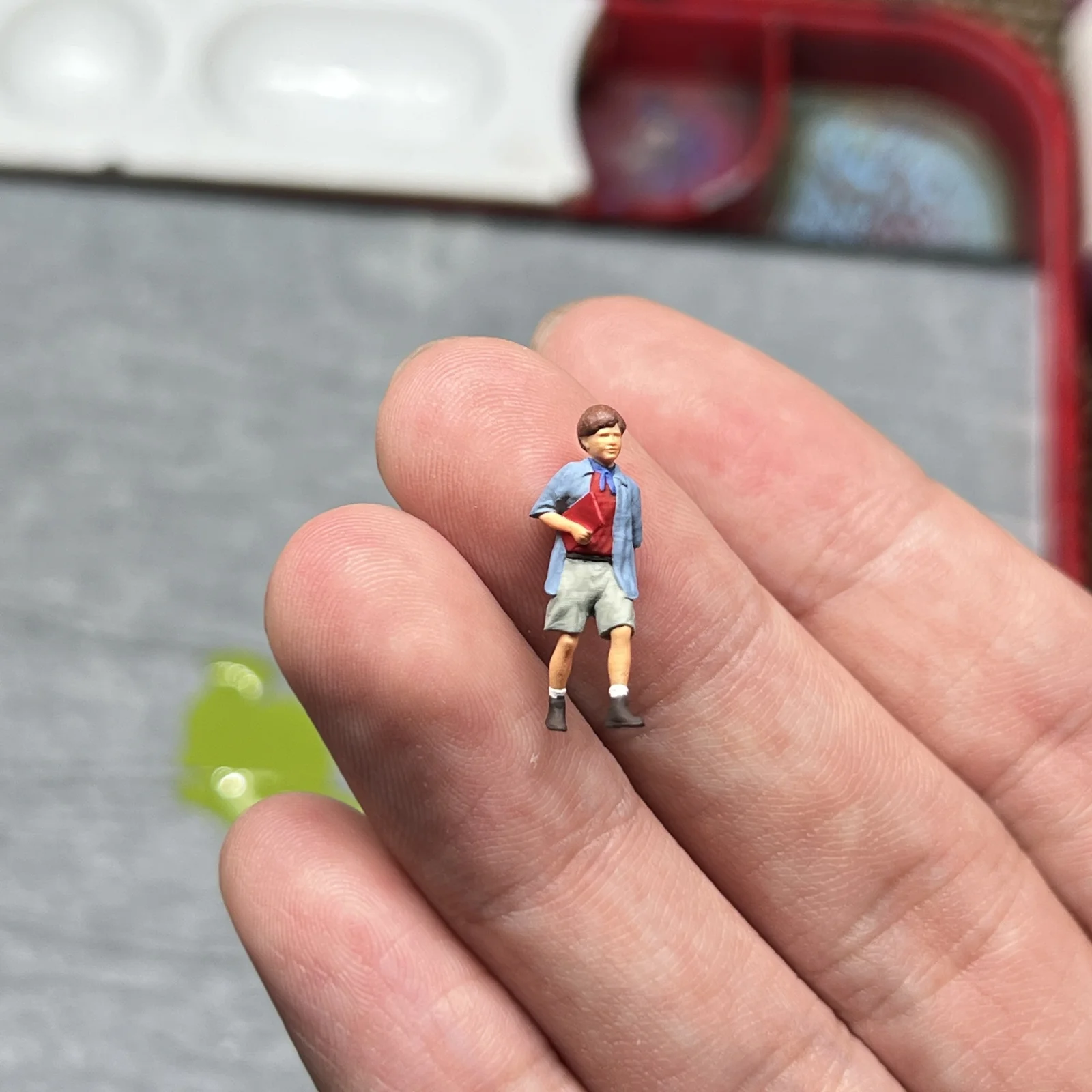
At 1:64, divide a real measurement by 64. A person 1.75 m tall becomes about 27 mm, and a 4.5 m car becomes about 70 mm long. Heights vary, and children are smaller. Check the stated height of each figure and compare it with the car's doors before fixing either piece down.
Some small toy cars do not have an exact 1:64 scale. For a measurement example, read 1:64 scale explained.
Make your first layout
- Choose one action: a person waits beside a car, walks along a pavement or works in a garage.
- Place the car or largest object on the base. Add the figure and leave enough room for the action.
- Add one or two supporting details, such as a kerb or a workbench. Keep the background simple.
- View the arrangement from the front and from the figure's eye level. Move anything that hides the main subject.
- Once satisfied, fix pieces in place using a method suitable for the materials. Let any adhesive dry as instructed before enclosing the scene.
Common mistakes
- Mixing incompatible sizes: check the figure, car and doors together, not just the labels.
- Adding too much: a few well-placed objects tell a clearer story than a crowded base.
- Gluing too early: take a phone photo of a temporary layout and review it first.
- Handling thin parts: lift a figure by its body or legs; do not bend projecting details.
- Ignoring storage: a closed case reduces dust, while direct sunlight, heat and damp can damage a display.
When you are ready, explore scene ideas or learn about display and storage.